
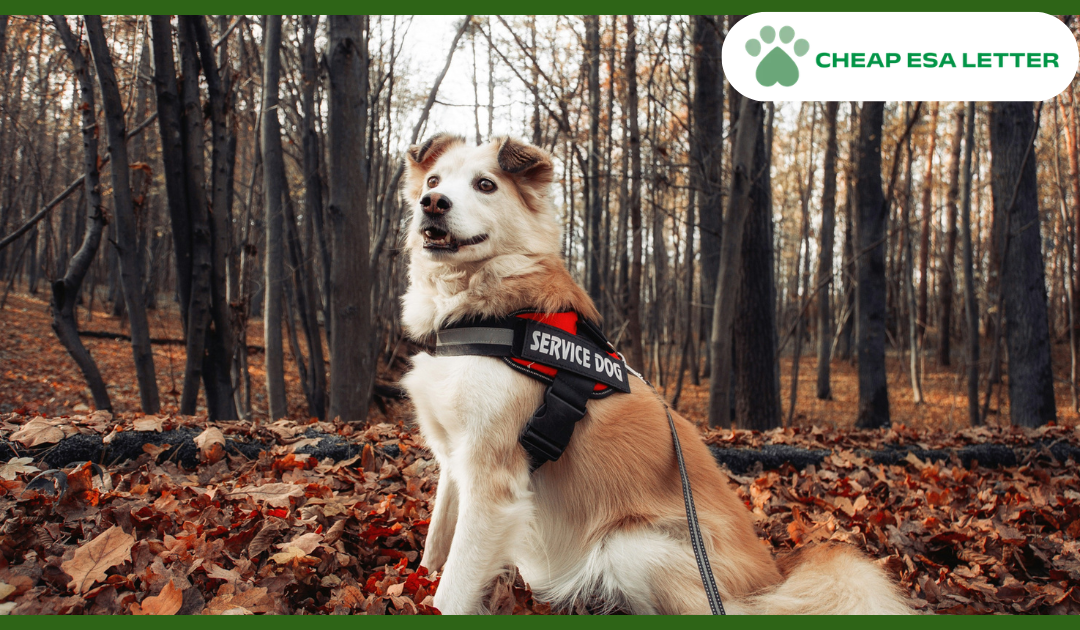
Living with PTSD, anxiety, depression, or another mental health condition can make everyday tasks feel overwhelming. For many Texans, a psychiatric service dog (PSD) becomes a genuine lifeline — not a luxury. If you’ve been wondering how to get a psychiatric service dog in Texas, this guide breaks down exactly what you need to do in 2026.
No fluff. Just a clear, honest walkthrough.
What Makes a Psychiatric Service Dog Different from an ESA?
This is the most common point of confusion — and it matters legally.
An Emotional Support Animal provides comfort through companionship and requires no task training. Its protections are mainly in housing under the Fair Housing Act — our guide to ESA laws in Texas covers exactly what that route protects.
A Psychiatric Service Dog is trained to perform specific tasks that directly address a handler’s mental health disability. Because of this, PSDs are protected under the Americans with Disabilities Act (ADA). That means full public access rights — stores, restaurants, hospitals, and more.
Examples of tasks a PSD may perform:
- Interrupting dissociative episodes by applying deep pressure therapy
- Waking a handler from nightmares (common in PTSD management)
- Guiding someone away from a crowded space during a panic attack
- Reminding their handler to take prescribed medication at scheduled times
- Performing perimeter checks to ease hypervigilance
If your dog only provides comfort by sitting near you, that doesn’t qualify it as a PSD under the ADA.
Do You Qualify? Eligibility in Texas
Texas follows federal ADA guidelines when it comes to psychiatric service dog eligibility. To qualify, you must have a diagnosed mental health condition that substantially limits one or more major life activities.
Conditions that commonly qualify include:
- Post-Traumatic Stress Disorder (PTSD)
- Generalized Anxiety Disorder or Panic Disorder
- Major Depressive Disorder
- Bipolar Disorder
- Schizophrenia or Schizoaffective Disorder
- Obsessive-Compulsive Disorder (OCD)
- Autism Spectrum Disorder (ASD)
A licensed mental health professional — a psychiatrist, psychologist, therapist, or licensed counselor — must evaluate and confirm your diagnosis. Self-diagnosing does not hold up legally.
Real Example: A Texas Army veteran named Marcus (name changed for privacy) struggled with PTSD after two deployments overseas. After working with his VA therapist, he was connected to a service dog trainer in San Antonio. Within eight months, his PSD was trained to recognize and interrupt his panic responses — allowing him to return to work full-time for the first time in years.
Step-by-Step: How to Get a Psychiatric Service Dog in Texas
Step 1 — Speak With a Licensed Mental Health Professional
Your first move is scheduling a consultation with a licensed mental health provider. They will evaluate your condition and determine whether a PSD is clinically appropriate for your treatment plan.
If you don’t have an existing provider, Cheapesaletter.com connects you with licensed professionals who can evaluate your needs and provide documentation quickly — entirely online.
Step 2 — Obtain Your PSD Letter
A PSD letter is written documentation from your licensed mental health professional. It confirms:
- You have a diagnosed mental health disability
- A psychiatric service dog is part of your treatment plan
- The letter is signed and dated by a licensed Texas clinician
This letter is not legally required to be carried at all times, but it serves as strong supporting documentation — especially for housing and employment accommodations. A PSD letter serves a different purpose than an ESA letter in Texas, which documents an untrained companion animal for housing accommodation only.
Step 3 — Choose Your Path to Getting a Dog
There are three main routes in Texas:
Option A: Adopt and Train
Adopt an untrained dog from a shelter and work with a certified trainer. Texas has high stray animal populations, so shelters like Operation Kindness in Carrollton and Give Us Paws in Houston are good starting points. Give Us Paws specifically offers free or discounted training for veterans with PTSD.
Option B: Buy a Pre-Trained PSD
Organizations that place fully trained psychiatric service dogs exist across Texas. Expect to pay between $15,000 and $30,000 for a fully trained dog. Waitlists can stretch from one to three years.
Option C: Self-Train with Guidance
The ADA does not require professional trainers. You can train your own dog — but it must reliably perform specific disability-related tasks. An online training course from a certified trainer (CPDT-KA) can help structure this process. This is typically the most cost-effective route.
Step 4 — Train for Public Access
Your PSD needs to behave appropriately in public settings — not just at home. The Canine Good Citizen (CGC) test from the American Kennel Club is an excellent benchmark. While not legally required in Texas, passing the CGC test shows your dog meets basic public behavior standards. You can find the test details at the AKC’s official site.
What Does It Cost to Get a PSD Letter in Texas?
Getting the clinical documentation — the PSD letter — is separate from the cost of obtaining or training your dog.
At Cheapesaletter.com/pricing, you can review transparent, affordable pricing for PSD letter consultations. Compared to paying out of pocket for multiple therapy sessions, this is often the fastest and most budget-friendly route to proper documentation.
Typical cost breakdown in 2026:
| Item | Estimated Cost |
|---|---|
| PSD Letter (online) | $99 – $199 |
| Professional dog training | $1,500 – $8,000 |
| Pre-trained PSD | $15,000 – $30,000 |
| Self-training with online course | $300 – $700 |
Texas Law: What You Need to Know
- No registration required: Texas does not require PSDs to be registered, certified, or carry ID.
- Fake service dogs are illegal: Claiming a pet is a service dog when it isn’t is a Class B misdemeanor in Texas — punishable by up to $1,000 in fines and 30 hours of community service.
- Housing protections apply: Landlords must allow PSDs in no-pet housing. They cannot charge extra pet fees.
- Employee leave: Texas state employees can take up to 10 paid working days per fiscal year to attend assistance dog training programs.
- Public denials carry penalties: Anyone who denies access to a legitimate PSD handler in Texas faces criminal penalties, including fines of up to $300.
For the official state law reference, see the Texas Governor’s Office Disability Services page.
Can You Ask About My Service Dog?
Under the ADA, a business or public place can only ask two questions:
- Is this animal required because of a disability?
- What task has this dog been trained to perform?
They cannot ask you to demonstrate the task, reveal your diagnosis, or produce certification papers.
Ready to Start? Here’s Your Next Move
If you’re ready to move forward, schedule a consultation with a licensed professional today. The process is straightforward and can often be completed within 24–48 hours online.
You can also explore more helpful mental health and service animal resources on the Cheapesaletter blog.
Understanding how to get a psychiatric service dog in Texas doesn’t have to be confusing. With the right documentation and a properly trained dog, you can access the support you legally deserve — and live with more independence and peace of mind in 2026.
Frequently Asked Questions
Do I need to register my psychiatric service dog in Texas?
No — Texas does not require service dog registration, and any website selling a “Texas PSD registry” is not a legitimate legal requirement.
Can my landlord deny my psychiatric service dog in Texas?
No — under the Fair Housing Act, landlords must allow PSDs even in no-pet properties and cannot charge additional pet fees.
What mental health conditions qualify for a PSD in Texas?
Conditions like PTSD, anxiety disorders, bipolar disorder, major depression, schizophrenia, and OCD commonly qualify, as confirmed by a licensed mental health professional.
Is a PSD letter the same as service dog certification?
No — a PSD letter is a clinical document from your mental health provider, while “certification” products sold online carry no legal weight under the ADA.
Can I train my own psychiatric service dog in Texas?
Yes — the ADA allows owner-training, provided your dog performs specific trained tasks directly related to your disability.
How long does it take to get a PSD letter online?
Through platforms like Cheapesaletter.com, the process typically takes 24–48 hours after your consultation.
Sources:
- Americans with Disabilities Act — Service Animal Requirements: https://www.ada.gov/resources/service-animals-2010-requirements/
- Texas Governor’s Office — Disability & Assistance Animals: https://gov.texas.gov/organization/disabilities/assistance_animals
- American Kennel Club — Canine Good Citizen Program: https://www.akc.org/products-services/training-programs/canine-good-citizen/
- U.S. Department of Housing and Urban Development — Assistance Animals: https://www.hud.gov/program_offices/fair_housing_equal_opp/assistance_animals
- National Institute of Mental Health — PTSD: https://www.nimh.nih.gov/health/topics/post-traumatic-stress-disorder-ptsd