
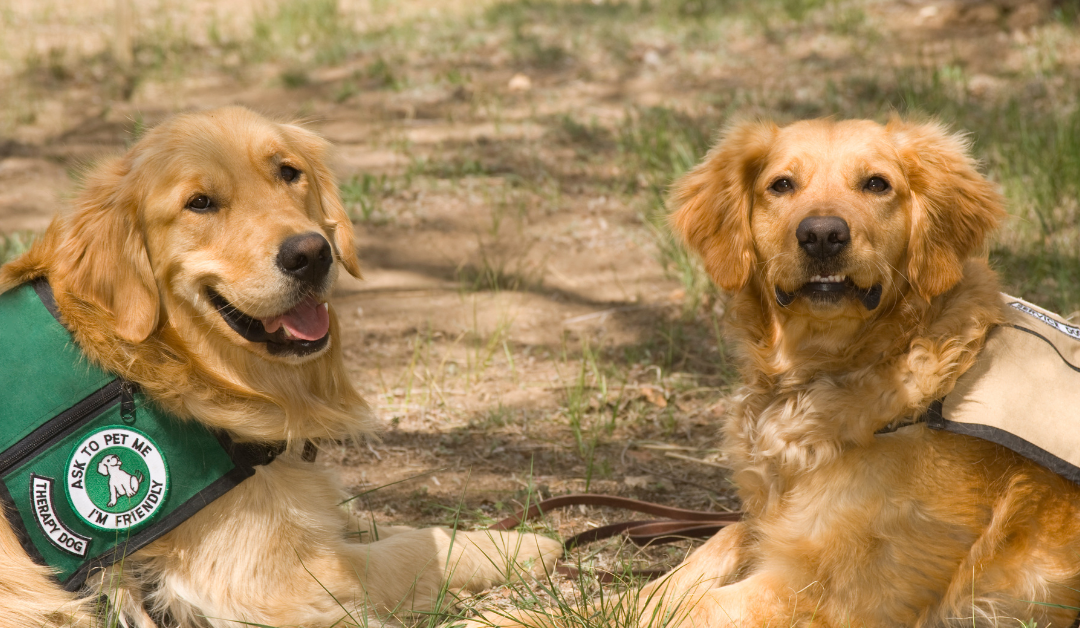
Living with a psychiatric condition that disrupts your daily routine isn’t something anyone chooses — but having the right support can make an enormous difference. For many Delaware residents, a psychiatric service dog has become that difference. This guide explains exactly how to get a psychiatric service dog in Delaware, including the state-specific legal landscape updated for 2026, the steps from evaluation to training, and the rights you’ll have once your PSD is ready.
Delaware’s Legal Framework — What You Need to Know First
Delaware updated its Equal Accommodations Law in 2018 to align with the ADA. Under Delaware Code Title 6, § 4502(26), a service animal is defined as a dog individually trained to do work or perform tasks for someone with a disability — including psychiatric, intellectual, and other mental disabilities. This is significant. It means Delaware recognizes psychiatric service dogs at both the state and federal levels. In 2024, the Delaware General Assembly passed Senate Bill 219, which created serious penalties for misrepresenting a pet or ESA as a service animal. This law specifically covers both public accommodations (§ 4514) and housing contexts (§ 4621). If you fake service dog status in Delaware, you’re looking at civil penalties.
Is a Psychiatric Service Dog Right for You?
Not every mental health condition qualifies. Under the ADA, your condition must substantially limit one or more major life activities. This isn’t just about having anxiety sometimes — it’s about a diagnosed condition that meaningfully impacts how you function day-to-day.
Qualifying conditions typically include:
- PTSD and complex trauma
- Severe depression with functional impairment
- Bipolar I or II disorder
- Panic disorder
- Schizophrenia or psychotic disorders
- Severe OCD
- Agoraphobia
The distinction between an ESA and a PSD also matters here. An emotional support animal provides comfort through presence. A psychiatric service dog is trained to take specific actions. Because of that training, PSDs get far stronger legal protections — including unrestricted public access, housing rights without pet fees, and in-cabin air travel. If you’re unsure which category fits your situation, our guide to ESA laws in Delaware breaks down exactly what each designation protects.
The 5 Steps to Getting Your Psychiatric Service Dog in Delaware
1. Speak With a Licensed Mental Health Professional
Your starting point is a formal evaluation. In Delaware, the licensed professional must be authorized to practice in the state. They may be a:
- Psychiatrist
- Psychologist
- Licensed Clinical Social Worker (LCSW)
- Licensed Professional Counselor (LPC)
- Primary care physician (in some cases)
During your session, the provider will assess whether your condition qualifies under ADA standards and whether a psychiatric service dog would help manage your symptoms. This is also when a PSD letter is issued if they confirm your need. You can verify a Delaware provider’s credentials through the Delaware Division of Professional Regulation.
2. Get a PSD Letter
A PSD letter from a licensed provider is not legally required for public access, but it’s a practical necessity for housing and air travel. It should include:
- The provider’s full name, license type, and license number
- The state where they’re licensed (must be Delaware)
- A statement confirming your qualifying disability
- A statement explaining why a psychiatric service dog would benefit your condition
Do not buy a PSD letter online from a service that skips a real evaluation. Delaware’s SB 219 means fraudulent documentation carries real legal risk for the handler. Affordable and legitimate PSD letter evaluations are available through CheapESALetter, where you connect with licensed Delaware professionals online.
3. Select or Source Your Dog
Delaware places no breed restrictions on service animals. Any dog can serve as a PSD if it’s properly temperament-tested and task-trained. That said, some breeds tend to be more naturally suited for psychiatric service work:
- Labrador Retrievers — calm, attuned to handler mood
- Golden Retrievers — gentle, highly trainable
- Standard Poodles — intelligent, low-allergen coats
- Border Collies — extremely responsive, task-focused
You can adopt a dog from a Delaware shelter or rescue organization and begin training yourself, or you can work with a professional program that places already-trained PSDs.
4. Train Your Dog for Task Work
This is the non-negotiable element. Your dog must perform at least one task that directly mitigates your psychiatric disability.
Examples of qualifying tasks:
- Waking the handler from a PTSD nightmare
- Performing deep pressure therapy during a panic attack
- Tactile stimulation to interrupt dissociation or flashbacks
- Retrieving medication from a specific location
- Creating a physical barrier in crowded spaces (crowd control)
- Alerting to escalating anxiety before it reaches crisis level
Training options in Delaware include:
- Owner-training — allowed under federal law; takes 6–18 months; most affordable
- Professional trainer — typically $150–$300 per session
- Fully trained PSD program — typically $15,000–$40,000
Delaware does not require professional certification for a PSD, but your dog must behave appropriately in all public settings.
5. Understand and Exercise Your Rights
Once training is complete, your PSD’s rights include:
Public Access (ADA): Your dog can accompany you to restaurants, stores, hospitals, government offices, and virtually all public spaces. Staff may ask only two questions: (1) Is this a service animal? (2) What task does it perform?
Housing (Fair Housing Act): Landlords across Delaware — even in strict no-pet buildings — must accommodate your PSD without charging pet rent or pet deposits. Under SB 219, misrepresentation in a housing context is also a civil offense.
Air Travel (ACAA): Your trained PSD can fly in the aircraft cabin with you at no charge under the Air Carrier Access Act. ESAs no longer have this protection since the 2021 DOT rule change.
What Delaware Residents Often Get Wrong
Mistake #1: Confusing an ESA letter with a PSD letter
These are different documents for different animals with different legal protections. An ESA letter in Delaware only covers housing. A PSD letter, plus task training, gives you full public access.
Mistake #2: Buying an ID card or certificate online
There is no official PSD registry in Delaware or anywhere in the U.S. Websites selling “registration” or “certification” badges are selling you something that has no legal value.
Mistake #3: Skipping task training
A dog that only provides comfort is legally an emotional support animal — not a service animal. Without task training, your dog doesn’t have ADA public access rights.
Real Story: From Panic to Public Life
Tanya, a 29-year-old social worker from Wilmington, was diagnosed with panic disorder after a traumatic accident left her unable to ride public buses or enter crowded spaces. Her therapist suggested a PSD as part of her treatment. After eight months of owner-training her rescue dog, Biscuit, Tanya taught him to perform a “block” behavior — standing in front of her to create personal space in crowds — and deep pressure therapy during panic episodes. “The first time I rode DART First State with Biscuit, I cried,” she says. “I hadn’t done that alone in three years.” Research from the National Institute of Mental Health confirms that anxiety disorders, including panic disorder, significantly limit daily functioning — exactly the kind of condition a well-trained PSD can help address.
Cost Overview for Delaware Residents
| Method | Estimated Cost |
| Self-training your dog | $300–$2,000 (courses, equipment, classes) |
| Working with a trainer | $150–$300 per session |
| Pre-trained PSD from program | $15,000–$40,000 |
| PSD letter through online provider | $129–$199 (varies by service) |
Check out CheapESALetter’s pricing page for current 2026 rates — they offer some of the most accessible pricing available for legitimate PSD documentation.
Your Next Step Starts Here
Understanding how to get a psychiatric service dog in Delaware is only the beginning. Taking that first step — booking a mental health evaluation — is what moves you from wondering to having real support.
CheapESALetter makes that first step simple. Connect with a licensed Delaware provider, complete your evaluation online, and get guidance from someone who understands both the clinical and legal side of psychiatric service dogs.
Still have questions? Don’t hesitate to get in touch — the team is available to help.
FAQ: Psychiatric Service Dogs in Delaware
Does Delaware require a PSD to wear a vest or carry ID?
No — vests and ID tags are not legally required in Delaware or under federal law. They may help in practical situations, but are not mandated.
Can my college dormitory in Delaware refuse my PSD?
No — campus housing is covered under both the ADA and the Fair Housing Act. Your school must provide reasonable accommodations for your PSD.
Do I need to re-certify my PSD annually in Delaware?
There is no official re-certification process. As long as your dog continues performing its trained tasks, its status as a PSD remains valid.
What’s the fastest way to get a PSD letter in Delaware?
Through a reputable online platform that connects you with licensed Delaware professionals. The evaluation is done via telehealth, and letters are typically issued within 24–48 hours.
Can I bring my PSD to a Delaware restaurant?
Yes — under the ADA, restaurants must admit service animals, including PSDs. The dog must remain well-behaved and under control.