
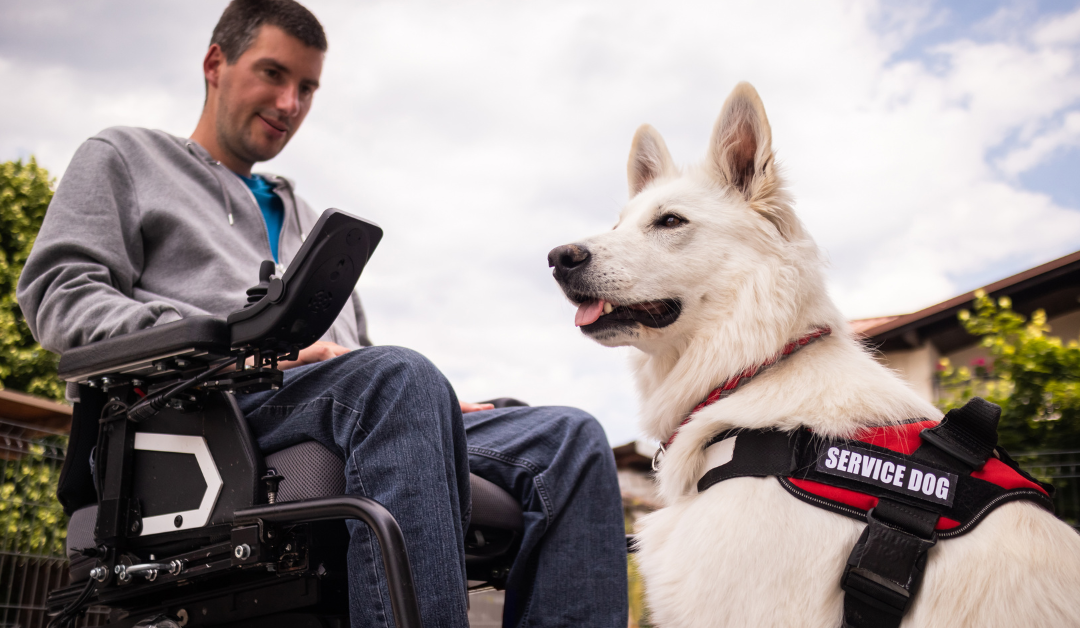
Connecticut residents dealing with PTSD, severe anxiety, bipolar disorder, or other mental health conditions have a powerful support option available to them — a psychiatric service dog. But the process can feel confusing, especially with so many rules around documentation, training, and legal access. If you’ve been wondering how to get a psychiatric service dog in Connecticut, this guide breaks it all down in plain, simple language. No legal jargon. No overwhelming walls of text. Just the steps you actually need.
What Makes a Psychiatric Service Dog Different From an ESA?
This is the most common point of confusion — and it matters.
An emotional support animal (ESA) provides comfort through companionship. It doesn’t have to be trained to do anything specific, and its legal protections are limited — mainly housing rights under the Fair Housing Act, which require a valid ESA letter in Connecticut.
A psychiatric service dog (PSD), on the other hand, is trained to perform specific tasks tied to your disability. Because of that task training, PSDs are recognized as service animals under the Americans with Disabilities Act (ADA). That means they can go almost anywhere with you — grocery stores, airports, workplaces, and public transportation.
Under Connecticut law (Conn. Gen. Stat. § 46a-44), public accommodations must follow both state law and the ADA. Connecticut’s state law is more limited in scope, but your PSD is fully protected under the federal ADA, which covers psychiatric and mental health disabilities.
Key tasks a PSD might be trained to perform:
- Deep pressure therapy during panic attacks
- Waking a handler from PTSD-related nightmares
- Interrupting self-harming or compulsive behaviors
- Retrieving medication during a crisis
- Guiding the handler away from a triggering environment
Do You Qualify for a Psychiatric Service Dog in Connecticut?
Before anything else, you need to confirm eligibility. The ADA requires that you have a mental or emotional disability that substantially limits one or more major life activities.
Conditions that commonly qualify include:
- Post-Traumatic Stress Disorder (PTSD)
- Panic disorder or severe generalized anxiety
- Major depressive disorder
- Schizophrenia or schizoaffective disorder
- Bipolar disorder
- Obsessive-compulsive disorder (OCD)
- Agoraphobia
The best first step is talking with a licensed mental health professional — a psychiatrist, psychologist, therapist, or licensed clinical social worker. They will evaluate whether your condition meets the threshold and whether a psychiatric service dog would genuinely benefit your treatment.
Note: Simply feeling anxious or going through a hard time doesn’t automatically qualify — the disability must substantially limit daily functioning. If you don’t meet that threshold but still benefit from an animal’s companionship, Connecticut ESA laws cover the housing protections available through the ESA route.
Step-by-Step: How to Get a Psychiatric Service Dog in Connecticut
Step 1 — Get a Mental Health Evaluation
Book an appointment with a licensed mental health professional in Connecticut. During this session, your provider will assess your condition, your current treatment plan, and whether a PSD is appropriate for you. This evaluation also sets the foundation for your PSD letter — a document from your provider confirming your diagnosis and need for a psychiatric service dog. While this letter isn’t required by the ADA for public access, it’s extremely useful for housing and air travel.
You can schedule an appointment with a licensed provider through CheapESALetter to get started quickly, without the long wait times of traditional referrals.
Step 2 — Find the Right Dog
Any breed can become a PSD. But temperament matters more than breed. You want a dog that is:
- Calm in crowded or loud environments.
- Responsive and attentive to your emotional state.
- Not reactive to strangers or other animals.
- Able to learn and retain task-specific training.
You can adopt from a shelter, purchase a dog from a reputable breeder, or work with a professional program that provides already-trained PSDs.
Connecticut-based resources to explore:
- The Exceptional Sidekick (Milford, CT) — offers trained PSDs for teens and young adults
- Heart of Gold Canine (CT) — specializes in service dog training programs
Step 3 — Complete Task Training
This is the most important step. Your dog must be trained to perform at least one task that directly helps manage your psychiatric disability.
You have three paths:
- Train your own dog — more affordable but takes 6 to 18 months of consistent effort.
- Hire a professional dog trainer — faster results, typically costs $150–$300 per session.
- Purchase a fully trained PSD — the quickest option, but costs anywhere from $15,000 to $40,000, depending on the program and training level.
Basic obedience training (sit, stay, heel) alone does not make a dog a psychiatric service dog. The task must be disability-specific.
Step 4 — Obtain Your PSD Letter
Once your provider confirms your diagnosis and PSD need, they’ll issue a PSD letter. This letter should include:
- The provider’s name, credentials, and license number.
- Confirmation that you have a qualifying mental health disability.
- A statement that a psychiatric service dog would benefit your treatment.
Visit CheapESALetter’s pricing page to see affordable options for connecting with a licensed Connecticut provider online.
Step 5 — Know Your Rights
With a trained PSD in Connecticut:
- Public access is protected under the ADA — businesses cannot deny you entry.
- Housing is protected under the Fair Housing Act — landlords cannot charge pet fees.
- Air travel is protected under the Air Carrier Access Act — your PSD can fly in the cabin at no charge.
- Workplace accommodation — under the ADA, employers must consider a PSD as a reasonable accommodation.
One important note: Connecticut has one of the strictest service animal fraud laws in the country. Misrepresenting an animal as a service dog is a Class C misdemeanor under Conn. Gen. Stat. § 46a-44(d), punishable by up to 3 months in jail and a $500 fine.
What If Someone Questions Your Dog in Public?
Under the ADA, a business is only allowed to ask you two questions:
- Is this a service animal required because of a disability?
- What task has the dog been trained to perform?
They cannot ask about your diagnosis. They cannot demand to see documentation. They cannot require your dog to wear a vest or carry identification.
If you’re ever denied entry, you have the right to file a complaint with the U.S. Department of Justice or with Connecticut’s Commission on Human Rights and Opportunities (CHRO).
A Real-World Example
Marcus, a 34-year-old Army veteran from Hartford, struggled with severe PTSD after two overseas deployments. Crowded spaces, loud noises, and unexpected sounds would trigger intense panic attacks. His therapist recommended a psychiatric service dog after medication alone wasn’t giving him enough relief. After working with a trainer for eight months, Marcus’s dog — a three-year-old Labrador named Scout — learned to interrupt hypervigilance episodes by pressing against Marcus’s legs and performing a grounding behavior. Marcus says Scout has “completely changed how I move through the world.” He now shops, uses public transit, and attends his son’s baseball games — all things he avoided before.
Stories like Marcus’s are increasingly common. According to research published by the U.S. Department of Veterans Affairs, psychiatric service dogs have shown meaningful reductions in PTSD symptom severity and improved independence in daily life.
Pricing Snapshot
Getting a PSD in Connecticut involves different costs depending on the route you take:
| Route | Estimated Cost |
| Train your own dog | $500–$2,500 (training materials + classes) |
| Professional trainer | $150–$300 per session |
| Fully trained PSD program | $15,000–$40,000 |
| PSD letter (online provider) | Starting around $129–$199 |
Explore CheapESALetter’s current plans for some of the most affordable documentation options available in 2026.
Ready to Take the Next Step?
Figuring out how to get a psychiatric service dog in Connecticut doesn’t have to be overwhelming. Start with a licensed evaluation, confirm your eligibility, and take things one step at a time. CheapESALetter connects you with licensed mental health professionals in Connecticut who understand the PSD process inside and out. Whether you need a PSD letter, have questions about your rights, or want guidance on next steps — help is available. Have questions before you start? Reach out through the contact page and get answers from a real professional. For more helpful guides on service animals and mental health documentation, check out the CheapESALetter blog.
Frequently Asked Questions
Does Connecticut require me to register my psychiatric service dog?
No — there is no official PSD registry in Connecticut or anywhere in the U.S., and no registration is legally required.
Can my landlord deny my psychiatric service dog?
No — under the Fair Housing Act, landlords must allow your PSD even in no-pet buildings, and they cannot charge you a pet deposit or pet rent.
Can I train my own psychiatric service dog in Connecticut?
Yes — the ADA allows owner-training, and Connecticut law does not prohibit it. Your dog simply needs to be task-trained and well-behaved in public.
How long does it take to get a psychiatric service dog?
Training typically takes 6 to 18 months if you’re doing it yourself. Purchasing a fully trained dog shortens the timeline significantly.
Is a PSD letter required to take my dog in public?
No — a PSD letter is not required for public access under the ADA. However, it’s strongly recommended for housing and air travel situations.
What conditions qualify for a psychiatric service dog in Connecticut?
Conditions that substantially limit daily functioning — such as PTSD, bipolar disorder, schizophrenia, severe anxiety, and major depression — typically qualify.
Sources
- ADA Requirements for Service Animals — U.S. Department of Justice
- Connecticut General Assembly — Service Animals and the ADA (2024 Report)
- Air Carrier Access Act — U.S. Department of Transportation
- Hawaii Revised Statutes § 347-2.5 (for comparative state law reference)
- Connecticut Human Rights and Opportunities Commission