
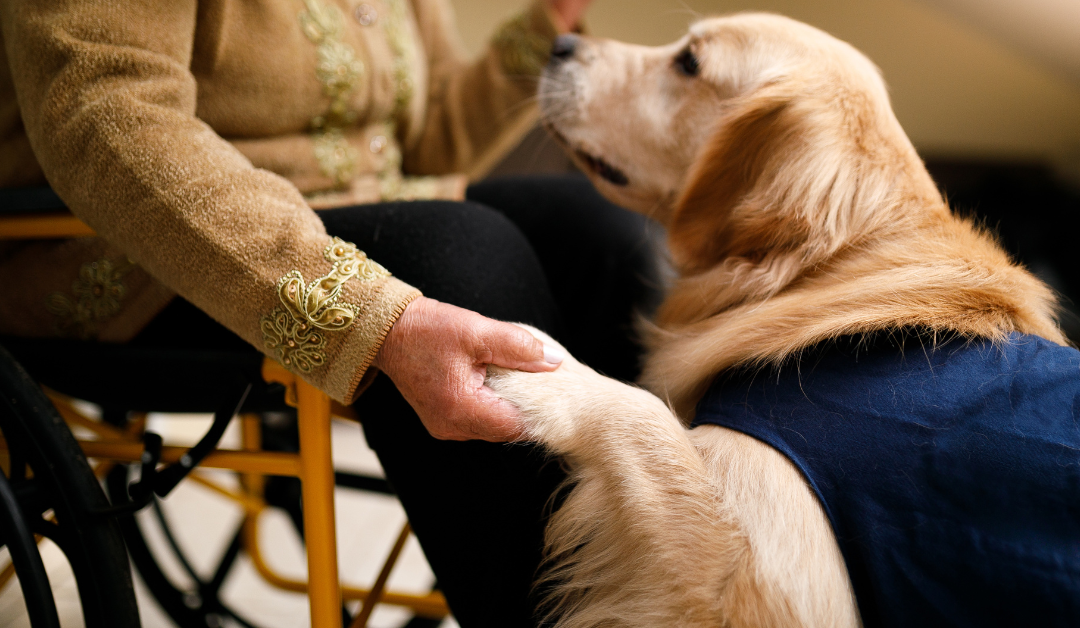
Colorado draws people for its mountains, its outdoors, and its relatively progressive culture around mental health. But altitude sickness, seasonal isolation, and high rates of veteran and outdoor worker injuries have also made psychiatric conditions like PTSD, depression, and anxiety quite prevalent statewide. For Coloradans navigating these challenges, understanding how to get a psychiatric service dog in Colorado in 2026 could be the most practical step toward greater daily stability. This guide covers Colorado’s specific laws, the real cost of a PSD, how to train your dog, and what your rights look like in Denver, Colorado Springs, Fort Collins, and everywhere in between.
Colorado’s Service Dog Law: What You Need to Know First
Colorado follows the ADA for service animal access and adds its own protections under Colorado Revised Statute (CRS) § 24-34-803, which specifically grants public access rights to service dogs-in-training — one of the strongest such protections in the country. For ESA documentation, CRS § 12-245-229 requires that the provider issuing documentation must have met the patient, be licensed, and be qualified to assess disability needs. This applies to ESA letters specifically but signals Colorado’s emphasis on legitimate, clinically grounded documentation.
What Colorado law provides your PSD in 2026:
- Full public access in all public accommodations statewide
- Housing protection under the Fair Housing Act (no pet fees, no breed restrictions)
- Protection for service dogs still in training to access public spaces with their handler — unique to Colorado
- Airline cabin access for task-trained PSDs (DOT self-certification required)
- No mandatory vests, ID cards, or registration
Colorado also bans pit bulls at the municipal level in some cities, but under state law, breed restrictions cannot apply to service dogs, including PSDs. Denver’s breed ban, for example, exempts certified service animals.
Who Qualifies for a PSD in Colorado?
The ADA definition applies: a psychiatric disability that substantially limits one or more major life activities. In Colorado in 2026, common qualifying conditions include:
- PTSD — highly prevalent among Colorado’s large veteran and mountain rescue/first responder community
- Severe depression, particularly during Colorado’s long winters and high-altitude seasonal shifts
- Panic disorder and agoraphobia
- Bipolar disorder with functional impairment
- OCD or anxiety disorders with severe compulsive behaviors
- Schizophrenia spectrum conditions
Colorado’s outdoor culture can sometimes mask mental health struggles — people appear active and functional while managing significant underlying psychiatric challenges. A PSD offers non-judgmental, consistent support regardless of how “together” someone appears to others.
The Process: Getting Your PSD in Colorado Step by Step
Step 1: Get a Proper Clinical Evaluation
Colorado’s CRS § 12-245-229 requires that for ESA-related documentation, the provider must have had direct clinical contact with the patient. While this technically applies to ESA letters, following this standard for your PSD evaluation is wise — it protects your documentation from any challenge. Find a Colorado-licensed LMHP — a licensed psychologist, LPC, LCSW, or psychiatrist. Telehealth options are available and legal in Colorado for this purpose. CheapESALetter connects you with licensed Colorado providers who can assess your eligibility remotely.
During your evaluation, bring or discuss:
- Your diagnosis history and treatment record
- Specific examples of how your condition limits daily activities
- Your understanding of what tasks a PSD would perform for you
Step 2: Secure Your Documentation
Your PSD letter from a Colorado-licensed LMHP should include their license number, a clear statement of your qualifying condition, and a recommendation for a psychiatric service dog. This document makes housing conversations much smoother and supports your DOT self-certification form for air travel. For documentation options and pricing,visit CheapESALetter’s pricing page.
Step 3: Train Your PSD for Colorado Life
Colorado living means your PSD will need to handle environments that many dogs find challenging:
- High-altitude hikes and trails — if you use your PSD outdoors, the dog needs endurance and paw care in snow/rocky terrain
- Crowded ski resorts and tourist areas — heavy foot traffic and loud environments
- Urban density in Denver’s LoDo or Capitol Hill — traffic, strangers, tight spaces
Your PSD’s tasks should match your daily reality. Common Colorado PSD tasks in 2026:
For veterans with PTSD: Hypervigilance support (back-to-wall positioning assistance), nightmare interruption, cue-based calming during startle responses
For seasonal/altitude depression: Morning routine motivation cues, encouraging physical activity, and social facilitation for isolated individuals
For panic disorder: DPT during episodes, guiding the handler away from triggering stimuli, alerting before full panic onset based on physiological cues
Colorado’s CRS § 24-34-803 allows PSDs-in-training to accompany handlers in public. This is significant — it means you can socialize and condition your PSD in real-world public environments while still in training, without legal risk. Almost no other state offers this.
Step 4: Understand Public Behavior Standards
Colorado requires that service animals remain under the handler’s control at all times — tethered, harnessed, or controlled by voice/visual commands. Disruptive or aggressive behavior is grounds for removal, even for a trained PSD.
Your dog must be:
- Housebroken
- Non-aggressive to people and other animals
- Responsive to your commands in all public environments
- Focused on you, not on distractions
Real PSD Costs in Colorado for 2026
Colorado’s cost of living is above the national average, and professional dog training in Denver or Boulder reflects that.
| Training Path | Estimated Cost in Colorado |
| Program-trained PSD | $15,000 – $35,000 |
| Private trainer (Denver/Boulder rates) | $150 – $300 per hour |
| Structured in-person group sessions | $100 – $250 per session |
| Online training program | $199 – $500 |
| Dog acquisition (rescue or breeder) | $50 – $2,500 |
| PSD letter from licensed LMHP | $100 – $200 |
Owner-training is the most accessible route for most Coloradans. The ADA requires no professional certification — only reliable task performance and appropriate public behavior. Colorado has several veteran-focused organizations and disability nonprofits that help offset costs. Check CheapESALetter’s blog for updated resources on PSD funding options.
PSD vs. ESA in Colorado: The Practical Difference
Colorado does not grant ESAs additional public access rights beyond federal law. With a valid ESA letter in Colorado, your animal has housing protection only — it cannot enter a Denver restaurant, board an Amtrak train for free, or accompany you on a ski bus without specific business permission.
A PSD, by contrast, can go anywhere you legally can.
If you’re unsure whether a PSD or ESA better suits your situation, book a consultation here, and a licensed Colorado professional can walk through the decision with you based on your specific condition and lifestyle.
Emma’s Story from Denver
Emma, a 33-year-old data analyst in Denver, was diagnosed with bipolar II disorder and complex PTSD following a period of domestic violence. Her therapist recommended a PSD as part of her longer-term recovery plan. Emma owner-trained a two-year-old Standard Poodle, Luca, to perform DPT during hypomanic episodes and interrupt dissociative episodes through trained pawing. Colorado’s in-training access law allowed Emma to bring Luca to public spaces throughout his training period, accelerating his socialization significantly. “Being able to take him to the grocery store while he was still learning was huge,” Emma said. “He was ready for real life before most dogs would have even started public access training.” Emma’s total cost: approximately $2,800 — well below what a program dog would have cost.
Your 2026 Action Plan
How to get a psychiatric service dog in Colorado comes down to three things: getting properly evaluated, training your dog for a specific task, and understanding the robust legal protections Colorado provides. Don’t let cost or confusion stop you. Connect with CheapESALetter to speak with a licensed Colorado professional and begin your evaluation today.
Frequently Asked Questions
Can my PSD join me on Colorado mountain trails and state parks?
Most Colorado state parks and public trails allow service animals — check specific park rules for remote wilderness areas, but maintained trails typically permit PSDs.
Does Colorado’s pit bull ban affect my PSD?
No — Colorado’s municipal breed-specific legislation cannot override the ADA’s protection for trained psychiatric service dogs.
Can I take my PSD-in-training to public spaces in Colorado?
Yes — CRS § 24-34-803 explicitly protects service dogs in training, allowing public access during the training period, which is unusual compared to most states.
How do I prove my dog is a PSD if challenged in Colorado?
Businesses may only ask two questions under the ADA: is it a service animal, and what task is it trained to perform — you are not required to show documentation.
Does Colorado’s CRS § 12-245-229 affect PSD letters?
The statute specifically governs ESA documentation — our guide to ESA laws in Colorado covers those requirements in full. PSD letters follow ADA standards, though using a Colorado-licensed provider who has properly evaluated you is always the best approach.