
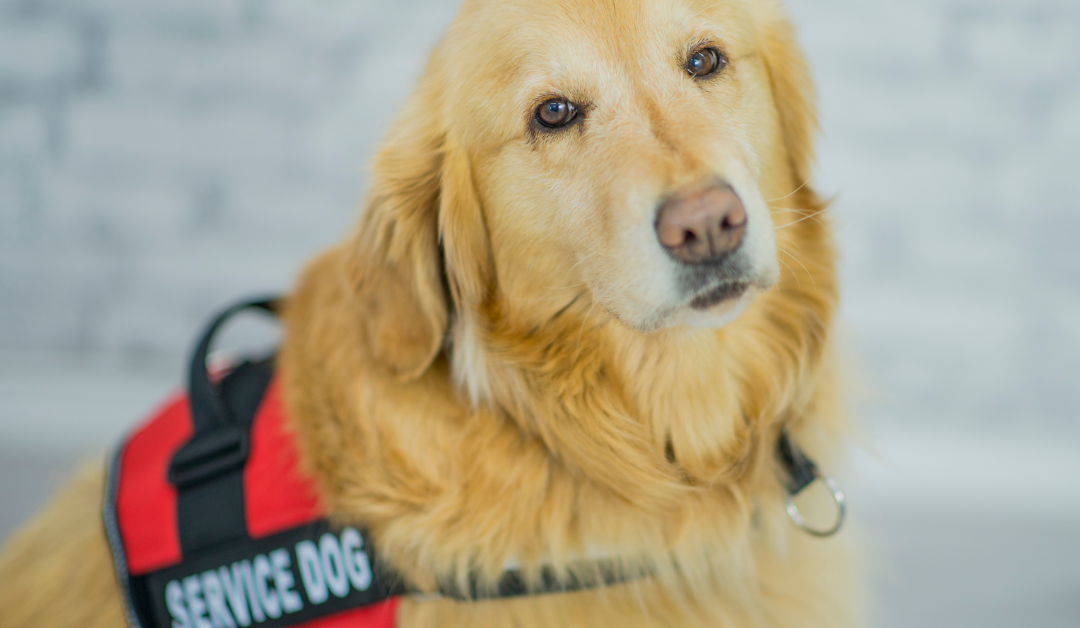
Living with PTSD, severe anxiety, or depression in Alabama can make everyday tasks feel overwhelming. A psychiatric service dog (PSD) is not just a pet — it is a trained working animal that performs specific tasks to help you manage your mental health condition. If you’ve been wondering how to get a psychiatric service dog in Alabama, this guide lays out exactly what you need to do in 2026, from qualifying to training to knowing your legal rights.
According to the National Institute of Mental Health, over 1 in 5 U.S. adults lives with a mental illness. For many of them, a psychiatric service dog is a life-changing resource.
Do You Actually Qualify for a PSD in Alabama?
Before you do anything else, you need to know if you meet the basic requirements.
Under the Americans with Disabilities Act (ADA), you qualify for a psychiatric service dog if you have a mental health condition that substantially limits one or more major life activities. This includes conditions like:
- Post-Traumatic Stress Disorder (PTSD)
- Panic disorder and severe anxiety
- Bipolar disorder
- Major depressive disorder
- Schizophrenia
- Obsessive-Compulsive Disorder (OCD)
Simply being diagnosed is not enough. The condition must genuinely affect your daily functioning — things like sleeping, working, leaving your home, or maintaining relationships.
If you’re unsure whether you qualify, CheapESALetter connects you with licensed mental health professionals who can assess your eligibility quickly and affordably.
Alabama Law and What It Means for Your PSD
Alabama follows both the federal ADA and its own state statutes under Alabama Code § 21-7-4, which protects the rights of individuals with disabilities to be accompanied by service animals in public.
Here is what Alabama law guarantees your PSD in 2026:
- Full public access — restaurants, stores, hotels, and most public spaces must allow your dog.
- No mandatory certification or registration — businesses cannot ask for proof of papers.
- Housing rights — landlords must accommodate PSDs even in no-pet properties.
- Only two questions allowed — staff may only ask if it is a service animal and what task it is trained to perform.
One thing to note: Alabama law explicitly prohibits falsely claiming a pet as a service dog, it is a Class C misdemeanor. Do not skip proper evaluation and training. The same anti-fraud statutes appear throughout ESA laws in Alabama, so the rules apply whichever route you take.
The Step-by-Step Process to Get Your PSD in Alabama
Step 1: Get Evaluated by a Licensed Mental Health Professional
Your first move is booking an evaluation with an LMHP — a therapist, psychologist, psychiatrist, or licensed clinical social worker who is licensed in Alabama.
During this session, you will discuss:
- Your diagnosis and symptoms
- How your condition limits your daily activities
- Why a psychiatric service dog would support your treatment plan
If you do not currently have a provider, schedule an appointment here to connect with a licensed professional who specializes in psychiatric service animal evaluations.
Step 2: Receive Your PSD Letter
Once your provider confirms your eligibility, they will issue a PSD letter — a signed document on official letterhead that includes their license number, your diagnosis, and a recommendation for a psychiatric service dog. This letter is not legally required under the ADA, but it is extremely useful for housing, travel, and reducing friction in daily life.
Step 3: Choose or Identify Your Dog
Any breed can serve as a psychiatric service dog, though temperament matters more than breed. Calm, intelligent, and attentive dogs tend to make the strongest PSDs. Labrador Retrievers, Golden Retrievers, and Standard Poodles are popular choices, but many people successfully train mixed-breed dogs.
Step 4: Train Your Dog for Psychiatric Tasks
This is the most critical step. Unlike emotional support animals, a PSD must be individually trained to perform a specific task related to your disability. Examples include:
- Deep pressure therapy (DPT) — lying on top of you during a panic attack
- Medication reminders — nudging you at scheduled times
- Nightmare interruption — waking you from PTSD-related night terrors
- Grounding assistance — redirecting self-harming or dissociative behaviors
- Crowd blocking — creating a physical barrier in overwhelming spaces
You can train your own dog. The ADA does not require professional training — as long as the dog reliably performs the task and behaves appropriately in public, it qualifies.
What Does a Psychiatric Service Dog Cost in Alabama?
Cost is one of the biggest concerns people have. Here is a realistic 2026 breakdown:
| Route | Estimated Cost |
| Program-trained PSD (fully trained, placed with you) | $15,000 – $30,000 |
| Professional trainer-assisted (you own the dog) | $10,000 – $20,000 |
| Owner-trained with occasional pro sessions | $1,000 – $5,000 |
| Online training programs | $150 – $500 |
| PSD letter from a licensed LMHP | $100 – $200 |
Many nonprofits and veteran-focused organizations offer grants and subsidized programs. Owner-training is also a legally valid and significantly more affordable path for most people.
For a full look at letter pricing and service options, visit the CheapESALetter pricing page.
PSD vs. ESA — Why the Difference Matters in Alabama
Many people confuse emotional support animals (ESAs) with psychiatric service dogs. They are not the same thing, and the gap in rights between them is significant.
| Feature | PSD | ESA |
| Public access rights | Full ADA access | Housing only |
| Requires task training | Yes | No |
| Airline cabin access (free) | Yes | Treated as a pet |
| Needs registration | No | No |
| Needs a letter | Optional but helpful | Required for housing |
Want to understand how ESA letter qualification works in another state? Check out how ESA qualification works in San Francisco for a useful comparison.
A Real-World Example: Marcus’s Story
Marcus, a 34-year-old Army veteran from Huntsville, Alabama, was diagnosed with PTSD following his third deployment. After months of struggling with nightmares and panic attacks in public spaces, he decided to pursue a psychiatric service dog.
He worked with a telehealth LMHP to get his PSD letter, adopted a two-year-old Labrador named Duke, and used an online training program combined with occasional sessions with a Huntsville-based trainer. Within eight months, Duke was reliably performing nightmare interruption and crowd-blocking tasks.
“I can go to the grocery store now,” Marcus said. “That might sound simple to most people. For me, it was impossible before Duke.”
Marcus’s total cost: under $3,500 — well below the cost of a program dog.
Take the Next Step in 2026
Getting a psychiatric service dog in Alabama in 2026 is entirely achievable, even without a large budget. The process starts with one honest conversation with a licensed mental health professional about how your condition is affecting your life.
How to get a psychiatric service dog in Alabama begins with your evaluation. From there, the training, the letter, and your legal rights all fall into place.
Ready to begin? Contact CheapESALetter today to connect with a licensed professional and take the first step toward the support you deserve.
Frequently Asked Questions
Does Alabama require my PSD to wear a vest or carry ID?
No — Alabama state law and the ADA do not require any vest, ID card, or certification tag for psychiatric service dogs.
Can my landlord charge a pet deposit for my PSD?
No — under the Fair Housing Act, landlords must accommodate a PSD without charging pet fees or deposits.
Can I train my own psychiatric service dog in Alabama?
Yes — the ADA allows self-training as long as the dog performs a disability-related task and behaves appropriately in public.
What is the difference between a PSD letter and an ESA letter?
A PSD letter documents your need for a task-trained service dog, while an ESA letter in Alabama covers only emotional support animals that have housing protections but no public access rights.
Can a business in Alabama ask me to remove my PSD?
Only if the dog is out of control, aggressive, or not housebroken — otherwise, removal is a violation of the ADA.
How long does it take to get a PSD letter online?
Most telehealth providers can issue a PSD letter within 24–48 hours of a completed evaluation.